
PSA Oxygen Generator
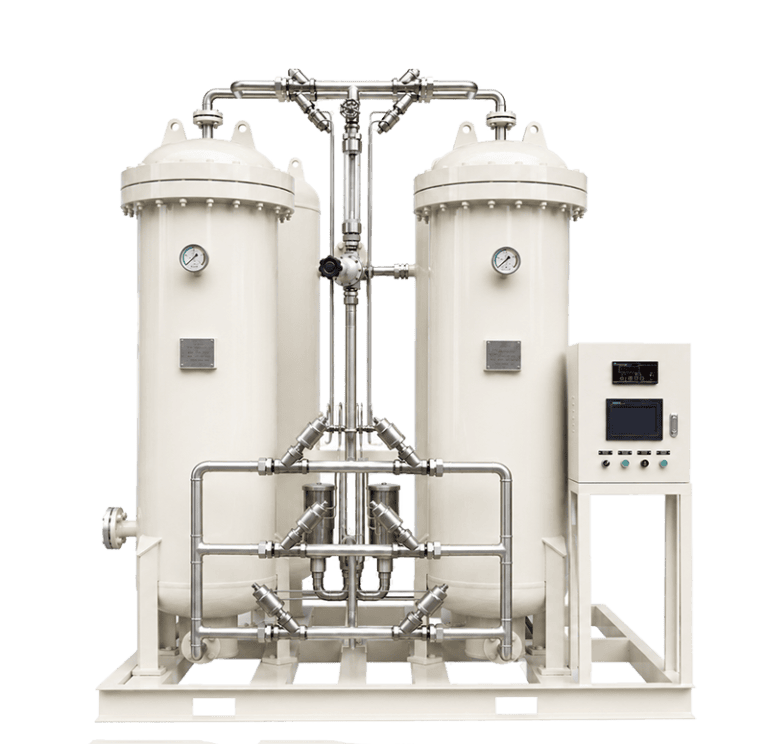
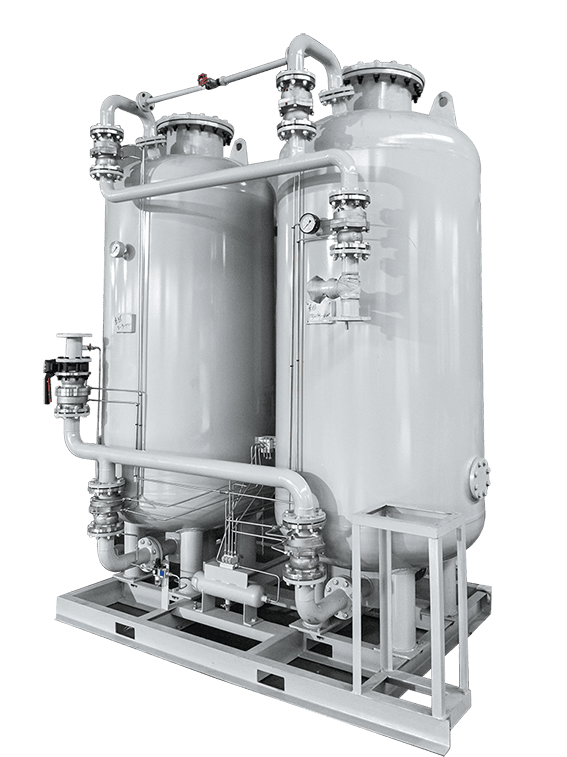
PSA Oxygen Generator uses compressed air and molecular sieves to separate oxygen from nitrogen. Through alternating adsorption and regeneration cycles, it continuously produces oxygen with a purity of up to 93% ±3%.
Flow
Up to 2000Nm3/h
Service support
24 hours/day
Purity
93% ±3%
Warranty period
18 months
Control System
Controlled by a Siemens PLC for stable and automatic operation.
Silencer
Can be connected to an external pipeline for outdoor exhaust discharge.
Solenoid Valves
Control valve switching for automatic system operation.
Pneumatic Valves
Stainless steel construction, available with Bray, GEMÜ, Festos, and other premium brands.
DEEP engineers design customized oxygen generator systems based on each customer’s specific requirements. All equipment is manufactured in our own factory using high-quality components to ensure safe, efficient, and reliable operation. DEEP oxygen generator feature remote monitoring, allowing users to check system status anytime, anywhere via mobile devices.
Advantages
remote monitoring
Continuous Regeneration
Energy Efficient
Premium Molecular Sieve
Fast Oxygen Production
Proprietary Diffusion Structure
Technical parameters of oxygen generation
Flow Rate: Up to 2,000 Nm³/h
Purity: 93%±3%
Power Consumption: 0.4–2 kWh/Nm³
Outlet Pressure: 0.4 MPa (Booster available)
Dew Point: Up to -60°C
Warranty: 18 Months
Design Life: 10 Years
Production Lead Time: From 3 Weeks
PSA Oxygen Generation Process
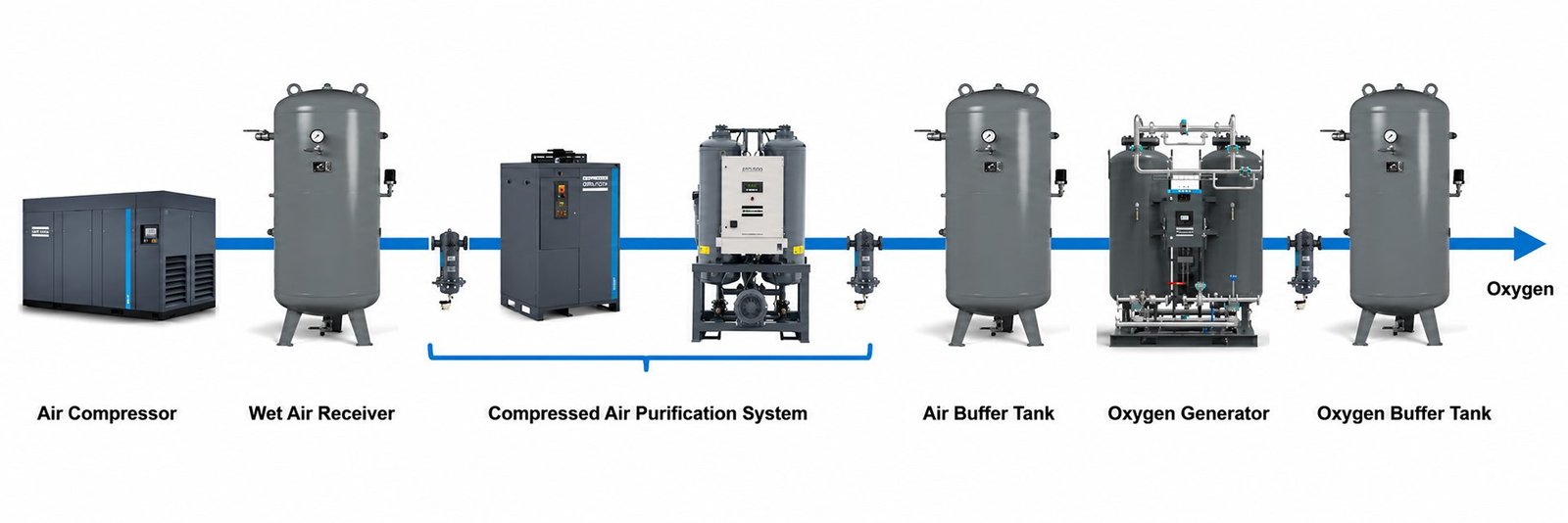
The screw air compressor compresses ambient air to provide the feed air for nitrogen generation, typically delivering pressures up to 1.0 MPa.
The compressed air is cooled in the receiver tank, causing moisture to condense. The tank is primarily used for initial water separation and drainage.
Removes moisture, oil, and dust from compressed air to provide clean, dry air for the nitrogen generation system, ensuring stable operation, high nitrogen purity, and extended equipment life.
Stabilizes air pressure and flow, reducing fluctuations to ensure smooth and reliable system operation.
Separates nitrogen from compressed air using PSA technology to produce high-purity oxygen continuously and efficiently.
Stores oxygen and stabilizes purity, pressure, and flow to ensure a continuous and reliable oxygen supply.
PSA Oxygen Generator FAQ
Typically, PSA oxygen generators produce oxygen with a purity of around 90–95%, depending on system design and operating conditions.
The flow rate can be customized according to your application, from small medical systems to large industrial oxygen plants.
Operating pressure depends on the system design, while product oxygen pressure can also be customized to meet user requirements.
Clean, dry and oil-free compressed air is recommended to ensure stable operation and protect the molecular sieve.
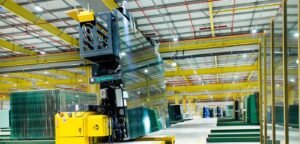
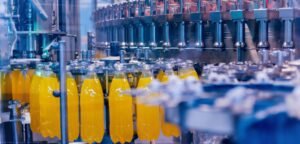
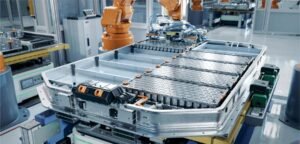
They are widely used in healthcare, wastewater treatment, aquaculture, glass, metallurgy, ozone generation and other oxygen-consuming applications.
The PSA oxygen generator can be equipped with PLC control for automatic start/stop, tower switching, purity monitoring and alarm functions.
Remote monitoring can be provided to check oxygen purity, flow, pressure and equipment operating status in real time.
Routine maintenance mainly includes replacing filter elements, checking valves and monitoring the air treatment system.