

DEEP Gas designs and supplies customized cryogenic air separation units for continuous production of oxygen, nitrogen and argon in gaseous or liquid form. Each ASU is engineered according to required capacity, purity, pressure, liquid-product ratio, energy target and site conditions.
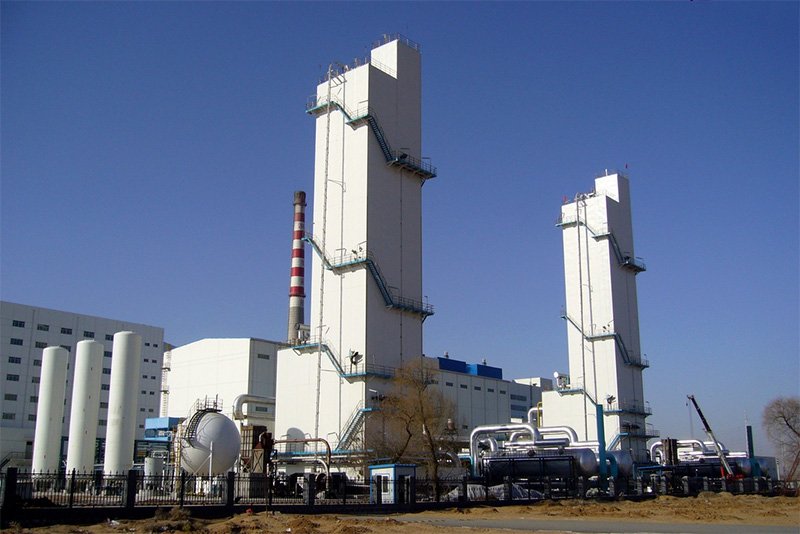
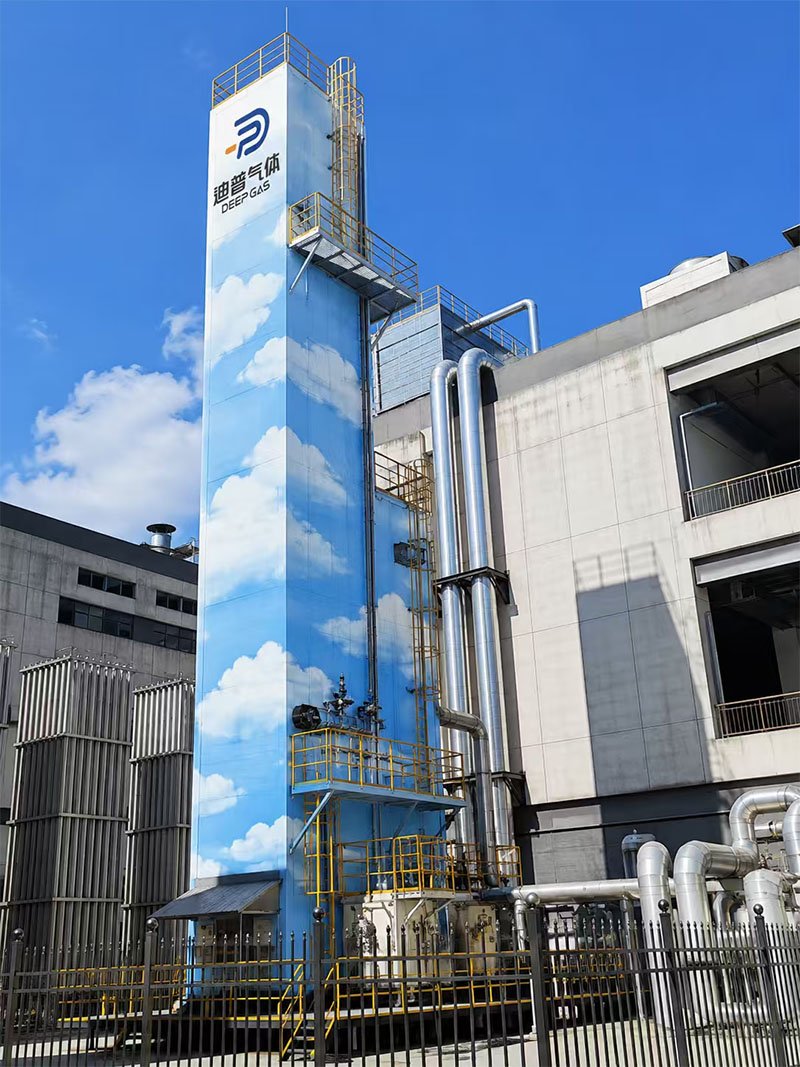
A cryogenic air separation unit compresses, purifies and cools atmospheric air to cryogenic temperatures. Oxygen, nitrogen and argon are then separated by rectification according to their different boiling points.
Cryogenic air separation technology is particularly suitable for large and continuous industrial gas demand, high-purity gas requirements and projects requiring multiple gaseous or liquid products from a single integrated plant.
Product configuration is customized according to your process demand. Gas and liquid production can be combined within one cryogenic air separation plant.
High-purity gaseous or liquid oxygen for steelmaking, metallurgy, glass manufacturing, chemical processing and other industrial applications.
High-purity gaseous or liquid nitrogen for inerting, blanketing, purging, chemical processing, electronics and industrial gas supply.
Optional argon recovery can be integrated depending on oxygen production scale, product requirements and overall project economics.
Each cryogenic ASU is designed according to the required gas products, capacity, purity, pressure, liquid production ratio and site utilities. Final performance parameters are confirmed during project engineering.
| Parameter | Typical / Configurable Range | Engineering Note |
|---|---|---|
| Products | O₂ / N₂ / Ar | Gas and/or liquid products |
| Oxygen Purity | Typical ≥99.5% | Customized according to application |
| Nitrogen Purity | High-purity specification available | Residual O₂ specified by project |
| Argon Recovery | Optional | Depends on ASU scale and project economics |
| Product Pressure | Customized | Internal or external compression |
| Liquid Products | LOX / LIN / LAR | Optional liquid co-production |
| Operating Mode | Continuous | Automatic industrial operation |
| Control System | PLC / DCS | Remote monitoring available |
| Power Consumption | Calculated by project | Depends on capacity, product pressure, liquid ratio and ASU configuration |
Atmospheric air passes through compression, purification, cryogenic cooling and distillation before oxygen, nitrogen and argon are delivered as gaseous or liquid products.
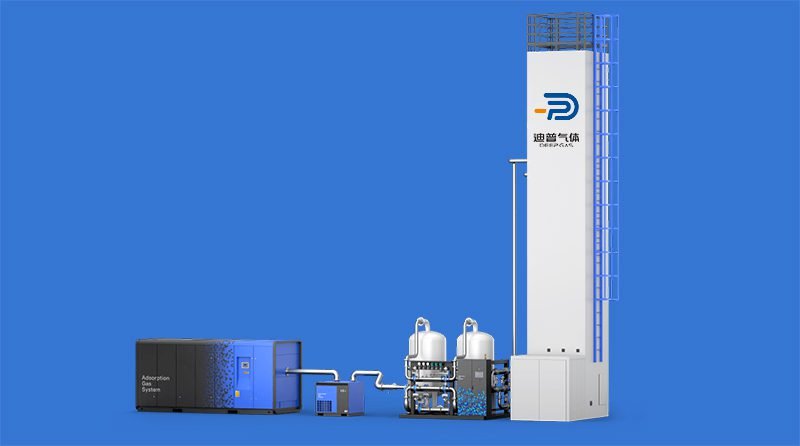
Ambient air is filtered and compressed to the required process pressure by the main air compressor.
Moisture, carbon dioxide and trace contaminants are removed before the air enters the cryogenic section.
Purified air is cooled in the main heat exchanger close to its liquefaction temperature.
The turboexpander generates refrigeration required to maintain the cryogenic heat balance of the plant.
Oxygen and nitrogen are separated in the rectification columns. Argon recovery can be added when required.
Gas or liquid products are delivered at the required purity, pressure and operating conditions.
The performance of an air separation plant depends on the coordinated design of the complete process system rather than any single machine.
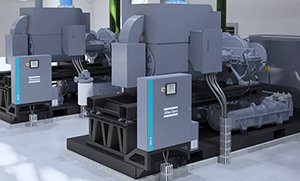
Provides stable feed-air flow and pressure for the complete cryogenic process.
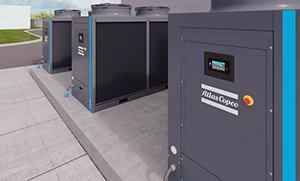
Reduces compressed-air temperature and moisture load before purification.
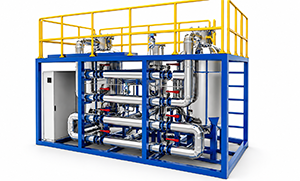
Removes H₂O, CO₂ and contaminants to protect the cryogenic section.
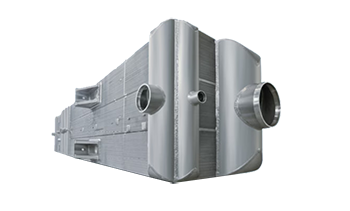
Recovers refrigeration between incoming air and outgoing gas streams.
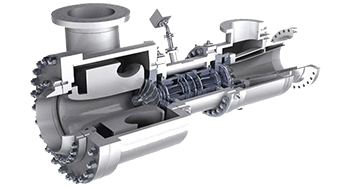
Generates refrigeration required for stable cryogenic operation.
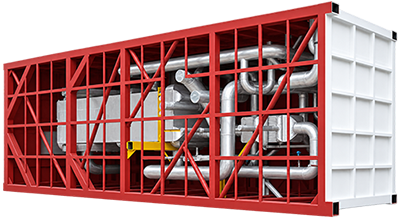
Core cryogenic separation section containing heat exchangers, columns, condensers and process piping.
The optimal product compression route depends on gas pressure, liquid-product demand, plant capacity, energy consumption, reliability and project investment.
Liquid oxygen or nitrogen is pressurized by a cryogenic pump and subsequently vaporized in the main heat exchanger to produce high-pressure gaseous product.
Oxygen or nitrogen leaves the cold box at lower pressure and is compressed downstream using a dedicated product gas compressor.