
Oxygen is one of the most important industrial gases used in the metallurgy industry. It supports many critical processes, including ironmaking, steelmaking, non-ferrous metal smelting, furnace enrichment, heating, and metal cutting. By increasing the oxygen concentration in combustion or refining processes, metallurgical plants can accelerate chemical reactions, improve heat transfer, and increase production efficiency.
Compared with ordinary air, oxygen-enriched gas introduces less nitrogen into the furnace. This can help increase flame temperature, reduce unnecessary gas volume, and improve the efficiency of melting, refining, and combustion processes. Depending on oxygen purity, flow rate, pressure, and production scale, metallurgical plants may use cryogenic air separation units, VPSA oxygen plants, PSA oxygen generators, or bulk liquid oxygen as their oxygen supply source.
Why Is Oxygen Used in Metallurgy?
Many metallurgical processes depend on oxidation and high-temperature combustion. Ordinary atmospheric air contains approximately 21% oxygen, while most of the remaining gas is nitrogen. Although nitrogen does not normally participate in the main combustion reaction, it still enters the furnace and absorbs a considerable amount of heat.
Increasing the oxygen concentration reduces the amount of nitrogen introduced into the process. This can raise combustion temperature, accelerate oxidation reactions, improve furnace productivity, and reduce exhaust-gas volume. In suitable applications, oxygen enrichment can also reduce fuel consumption and allow existing furnaces to achieve higher production capacity without major modifications.
The main benefits of oxygen use in metallurgy include:
- Higher combustion temperature
- Faster oxidation reactions
- Improved furnace productivity
- Reduced fuel consumption in suitable processes
- Lower exhaust-gas volume
- Better control of melting and refining
- Increased production capacity
The actual performance improvement depends on furnace design, raw materials, oxygen concentration, injection method, and operating conditions.
Oxygen in Basic Oxygen Steelmaking
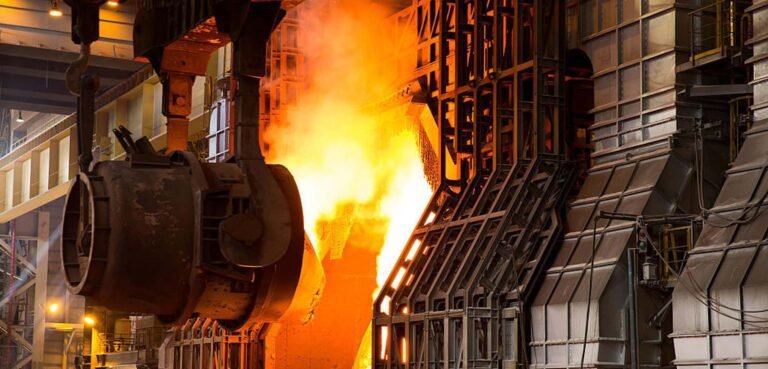
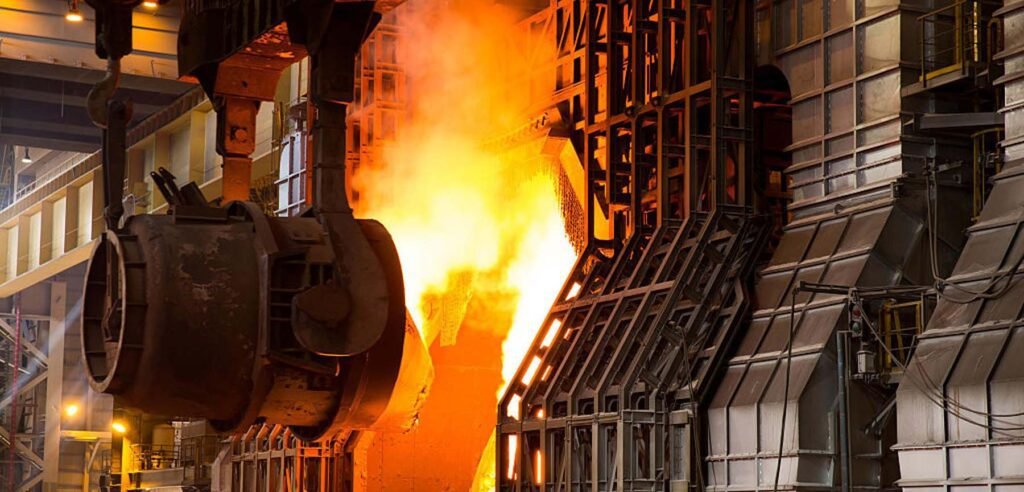
Basic oxygen furnace steelmaking is one of the largest industrial applications of oxygen. During the process, high-purity oxygen is blown at high velocity into molten iron through an oxygen lance. The oxygen reacts with carbon, silicon, manganese, phosphorus, and other elements that need to be removed or controlled during steel refining.
Carbon removal is particularly important. When oxygen reacts with carbon in the molten iron, carbon monoxide and carbon dioxide are formed, reducing the carbon content of the metal. These oxidation reactions also release significant heat, helping maintain the high temperature required for refining and allowing additional scrap steel to be melted during the process.
Compared with older air-blown steelmaking methods, oxygen blowing significantly shortens the steelmaking cycle and improves control over the chemical composition of the final steel. Because excessive nitrogen and other impurities may affect steel quality, basic oxygen furnaces generally require high-purity oxygen. Large integrated steel plants therefore commonly rely on cryogenic air separation units for continuous oxygen supply.
Oxygen in Electric Arc Furnaces
Electric arc furnaces, commonly known as EAFs, use electrical energy as the primary heat source for melting scrap steel and other metallic materials. However, oxygen also plays an important role in modern EAF operation and is frequently supplied through burners, oxygen lances, or integrated injection systems.
During the early stage of scrap melting, oxygen-assisted burners can increase heat input and help shorten melting time. After a molten bath is formed, oxygen injection promotes the oxidation of carbon and other unwanted elements. Proper oxygen use can therefore improve both the melting and refining stages of electric arc furnace operation.
Oxygen can also react with carbon to produce carbon monoxide inside the furnace. Together with proper slag control, this contributes to the formation of foamy slag, which improves heat transfer from the electric arc to the molten steel and helps protect furnace walls and electrodes from excessive thermal radiation.
When properly controlled, oxygen injection in an electric arc furnace can help shorten melting time, reduce electrical energy consumption, improve furnace productivity, and support more efficient steel refining.
Oxygen Enrichment in Blast Furnaces
Blast furnaces use hot air to support coke combustion and generate the reducing gases required to convert iron ore into molten iron. Additional industrial oxygen can be added to the hot blast to increase its oxygen concentration, a process commonly known as oxygen enrichment.
With a higher oxygen concentration, more fuel can be burned within a given gas volume while less nitrogen enters the furnace. Oxygen enrichment is often combined with pulverized coal injection and other furnace optimization technologies to improve fuel utilization and increase iron production.
Another benefit is the reduction in total blast-gas volume. By decreasing the amount of nitrogen entering the furnace, oxygen enrichment can improve thermal conditions and allow higher production intensity. Unlike basic oxygen steelmaking, some blast furnace enrichment applications do not necessarily require ultra-high-purity oxygen, so VPSA oxygen generation may be suitable depending on the specific process requirements.
Oxygen in Non-Ferrous Metal Smelting
Oxygen is also widely used in the production of copper, lead, zinc, nickel, and other non-ferrous metals. Many non-ferrous metal concentrates contain sulfides that must be oxidized during smelting, making oxygen concentration an important factor in furnace performance.
Introducing oxygen or oxygen-enriched air can increase oxidation intensity while reducing the amount of nitrogen entering the process. This may improve furnace productivity, increase smelting capacity, and reduce the total volume of process gas that must be handled by downstream equipment.
In many sulfide smelting processes, oxidation itself releases a considerable amount of heat. Increasing oxygen concentration can therefore reduce the need for additional fuel under suitable operating conditions. This is one reason why oxygen enrichment is widely used in modern copper and other non-ferrous smelting technologies.
Because some non-ferrous processes require large volumes of oxygen without requiring the extremely high purity used in basic oxygen steelmaking, VPSA oxygen generation can be an attractive solution for suitable smelting and furnace-enrichment applications.
Oxy-Fuel Combustion in Metallurgical Furnaces
Oxy-fuel combustion uses oxygen instead of ordinary air, or significantly increases the oxygen concentration in combustion air. In conventional air-fuel combustion, a large portion of fuel energy is used to heat nitrogen that enters the furnace with atmospheric air. Reducing this nitrogen load allows more of the available energy to be transferred directly to the material being heated or melted.
As a result, oxygen-enriched or oxy-fuel combustion can increase flame temperature and improve heat-transfer efficiency. It can be used in metal melting furnaces, reheating furnaces, ladle heating systems, non-ferrous smelting furnaces, and other high-temperature metallurgical processes.
Depending on furnace design and operating conditions, oxygen enrichment may help shorten heating time, reduce fuel consumption, and increase production capacity. Lower nitrogen input can also reduce flue-gas volume, which may decrease the load on downstream exhaust-gas treatment systems.
Oxygen for Metal Cutting and Heating
Metallurgical plants also use oxygen in downstream metal processing, maintenance, and cutting operations. One of the most common examples is oxy-fuel cutting, which is widely used for carbon steel plates, slabs, billets, and structural components.
During oxy-fuel cutting, a fuel gas first heats the steel surface to the required ignition temperature. A high-pressure oxygen jet is then directed onto the heated metal, where oxygen reacts with iron to form iron oxides and release additional heat. The oxygen jet simultaneously removes molten oxides from the cutting zone, allowing the cutting process to continue through the material.
Oxygen-fuel systems can also be used for preheating and other maintenance operations throughout steel and metallurgical plants. Although these applications normally consume less oxygen than steelmaking furnaces, they still depend on a stable and reliable oxygen supply.
What Oxygen Purity Is Required in Metallurgy?
There is no single oxygen purity suitable for every metallurgical application. The required purity depends on the specific process, oxygen injection method, furnace design, product quality requirements, and the role oxygen plays in the reaction.
High-purity oxygen is generally required for processes such as basic oxygen steelmaking, where nitrogen and other impurities may directly affect refining efficiency and steel quality. In contrast, applications such as oxygen enrichment, combustion enhancement, and certain non-ferrous smelting processes may operate effectively with oxygen concentrations of approximately 90–95%.
This difference is important when selecting an oxygen generation system.
| Application | Typical Oxygen Supply |
|---|---|
| Basic oxygen steelmaking | High-purity cryogenic oxygen |
| Large integrated steel plant | Cryogenic air separation |
| Blast furnace oxygen enrichment | Cryogenic or VPSA, depending on process |
| Non-ferrous smelting | VPSA or cryogenic oxygen |
| Oxygen-enriched combustion | VPSA / PSA / cryogenic |
| Small decentralized oxygen demand | PSA oxygen generation |
Actual oxygen purity, pressure, and flow requirements should always be determined according to the specific furnace and production process.
VPSA Oxygen Generation for Metallurgy
VPSA stands for Vacuum Pressure Swing Adsorption. A VPSA oxygen plant separates oxygen from atmospheric air using specially selected molecular sieve adsorbents. During adsorption, nitrogen is preferentially captured by the adsorbent while oxygen-rich gas passes through the system and is delivered to the production process.
After adsorption, the molecular sieve is regenerated under vacuum before the next operating cycle begins. This combination of adsorption and vacuum regeneration makes VPSA particularly suitable for applications requiring relatively large oxygen flow rates at approximately 90–95% purity.
Typical metallurgical applications include furnace oxygen enrichment, non-ferrous metal smelting, industrial combustion, and other high-flow oxygen processes. Compared with purchasing and transporting liquid oxygen, an on-site VPSA oxygen plant can provide continuous oxygen production directly at the metallurgical facility and reduce dependence on external gas deliveries.
Modern VPSA oxygen systems can also be integrated with automatic control systems so that oxygen production is adjusted according to actual plant demand. This can help improve operating efficiency when oxygen consumption varies during different stages of production.
PSA Oxygen Generation for Metallurgical Applications
PSA, or Pressure Swing Adsorption, also separates oxygen from compressed air using molecular sieve adsorbents. Compared with VPSA, PSA systems are generally used for smaller oxygen capacities and are well suited to decentralized or intermittent oxygen requirements.
A typical PSA oxygen generation system includes an air compressor, compressed-air purification equipment, adsorption towers, an oxygen buffer tank, oxygen analyzer, and automatic control system. Because the equipment can be installed close to the point of use, PSA provides a convenient on-site oxygen source for smaller metallurgical processes.
For facilities with relatively limited oxygen consumption, PSA oxygen generation can reduce dependence on oxygen cylinders or bulk liquid oxygen deliveries. The final selection should still be based on required oxygen capacity, purity, pressure, and operating hours.
Cryogenic Air Separation for Large Steel Plants
Cryogenic air separation is generally preferred when a metallurgical complex requires very large quantities of high-purity industrial gases. The process cools atmospheric air to extremely low temperatures and then separates its major components through cryogenic distillation.
A cryogenic air separation unit can produce high-purity oxygen, nitrogen, and argon simultaneously. This makes it particularly suitable for large integrated steel plants, where all three gases may be required continuously for steelmaking, inerting, purging, refining, and other production processes.
Compared with PSA and VPSA systems, cryogenic air separation requires higher initial investment and more complex equipment. However, it can provide much larger production capacity and higher gas purity, making it the preferred solution for many large-scale steel and metallurgical complexes.
How to Select an Oxygen Generation System for Metallurgy
Choosing between PSA, VPSA, cryogenic air separation, and liquid oxygen should be based on the overall gas requirement rather than oxygen purity alone. A system that is technically suitable at one production scale may not provide the best operating cost or flexibility at another.
Important selection factors include:
- Required oxygen flow rate
- Oxygen purity
- Delivery pressure
- Annual operating hours
- Peak and minimum oxygen demand
- Electricity cost
- Available installation space
- Required system redundancy
- Future production expansion
For smaller oxygen requirements, PSA may provide a simple and flexible solution. For larger flows of approximately 90–95% oxygen, VPSA can offer attractive operating efficiency. When very large quantities of high-purity oxygen are required, especially together with nitrogen and argon, cryogenic air separation is usually the preferred technology.
A properly designed oxygen generation system should also consider oxygen analysis, pressure control, buffer storage, automatic operation, backup supply, and integration with the plant control system.
Frequently Asked Questions
Why is oxygen used in the metallurgy industry?
Oxygen is mainly used to accelerate combustion and oxidation reactions in metallurgical processes. Increasing the oxygen concentration can improve heat transfer, increase furnace productivity, support faster melting and refining, and reduce the amount of nitrogen entering the furnace.
What oxygen purity is required for steelmaking?
The required oxygen purity depends on the steelmaking process. Basic oxygen steelmaking generally requires high-purity oxygen, while blast furnace enrichment, furnace combustion, and certain non-ferrous metallurgical processes may use oxygen with a lower purity.
Is VPSA oxygen suitable for metallurgy?
Yes. VPSA oxygen systems are suitable for many metallurgical applications that require relatively large oxygen flow rates at approximately 90–95% purity. Typical applications include oxygen enrichment, industrial furnace combustion, and certain non-ferrous metal smelting processes.
What is the difference between PSA and VPSA oxygen generation?
Both technologies use molecular sieve adsorbents to separate oxygen from air, but their operating cycles are different. PSA normally uses compressed-air pressure swing cycles and is more suitable for smaller capacities, while VPSA uses vacuum regeneration and is generally more economical for larger oxygen flow rates.
When should a steel plant use a cryogenic air separation unit?
Cryogenic air separation is generally preferred when a steel plant requires very large quantities of high-purity oxygen or needs oxygen, nitrogen, and argon simultaneously. It is therefore commonly used in large integrated steel complexes with continuous industrial gas demand.
Conclusion
Oxygen plays an essential role in modern metallurgy, including basic oxygen steelmaking, electric arc furnaces, blast furnace enrichment, non-ferrous metal smelting, oxy-fuel combustion, heating, and cutting. By selecting the correct oxygen concentration and supply method, metallurgical plants can improve furnace efficiency, increase production capacity, and optimize energy use.
Different processes require different oxygen purity, pressure, and flow rates. PSA systems are suitable for smaller on-site oxygen demand, VPSA oxygen plants are well suited to many high-flow oxygen enrichment applications, while cryogenic air separation units remain the primary solution for large integrated steel plants requiring high-purity industrial gases.
Selecting the right oxygen generation system can provide a more reliable gas supply, improve operating efficiency, and reduce long-term oxygen supply costs for metallurgical production.